The primary goal of our weekly bulletin is to engage, inform, and inspire current and potential members, shedding light on the positive impact Rotary has on our community and the world at large. However, is this the full extent of our scope? To answer this question, let's take a journey through the annals of Rotary history to understand how our approach to engaging and recruiting members has evolved. My source of inspiration came from the book below which contains articles written for Rotarians between 1911 and 1986. Many of the writers were inspirational writers of their era, reflecting the philosophy of the time. Some were Rotarians and some were not.
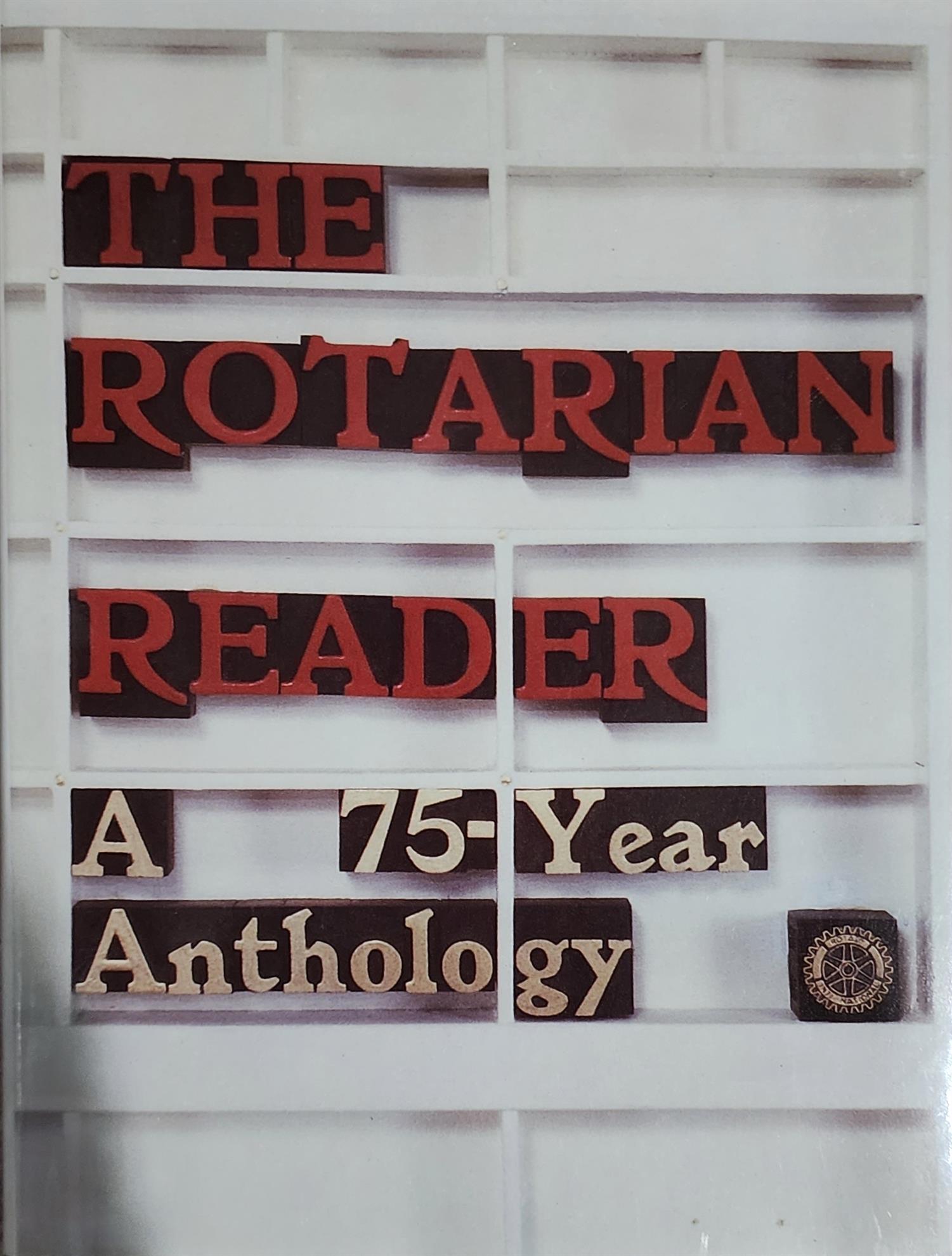
In 1911, Rotary was in its infancy, a fledgling idea conceived to bring hope and meaningful change to the world. Two visionaries, Chesley R. Perry and Paul P. Harris, recognized the need for a newsletter to disseminate their essay titled "Rational Rotarianism" to the 1,000 Rotarians scattered across 16 Clubs in the USA and Canada. This publication, aptly named "The National Rotarian," started as a modest 12-page periodical. At the time, it faced challenges, including financial constraints due to the absence of modern technology and the perception that such a newsletter was more of a luxury than a necessity for Rotary's progress.
To keep the newsletter afloat, Rotarians sought advertisements to cover the printing costs. The first five issues, published sporadically, operated at a loss. However, with perseverance and determination, by the sixth issue, it was voted at the 1912 convention that the magazine was worth keeping. Thus began a journey of publishing within Rotary that would play a pivotal role in shaping the organization's direction.
With Rotary still in its infancy, grappling with growing pains and evolving its philosophy, the question arose: How can we attract people to this evolving service club structure? The answer was content. In 1912, Rotary International President Glenn C. Mead of Philadelphia proposed that Rotary magazines should not be confined to Rotarian-specific content but should contain reading material of general interest. He believed the magazine should appeal to businessmen in general, not just Rotarian businessmen.
Fast forward to 2023, and Rotary is a well-established global organization. However, it faces competition from various sources, including the constraints of time, competing interests, family life, and personal fulfillment. In some ways, Rotary has come full circle to redeveloping a coherent philosophy that resonates with individuals in the modern age.
This brings us to the question of whether our Club bulletin is adequately equipped to captivate those who may not be inherently interested in Rotary. Is it designed to spark curiosity and lead individuals to ask for more information? Perhaps it's time to reconsider our focus. Instead of making it all about us, we should shift our perspective to see Rotary as more about everyone.
In today's world, Rotary needs people with diverse skill sets and interests to contribute to our community and make it more dynamic. By expanding the range of stories we share in our bulletin to encompass topics that might interest the average person, we can broaden our appeal and demonstrate that Rotary is not just a club but a platform for positive change. We need to emphasize that Rotary is not limited to a specific group but is an inclusive organization that welcomes individuals willing to contribute their talents and passions to create a better world.
Rotary's history, at least through its main publication teaches us that the power of content and the ability to engage a wider audience have always been pivotal to our growth. By adopting a more inclusive approach, diversifying our content, and showcasing how Rotary is about everyone, we can take the next step in attracting new members and revitalizing our organization's mission in the modern age.